Tankless water heaters are designed to provide hot water on demand without storing it in a traditional tank. However, “tankless” does not mean “maintenance-free.”
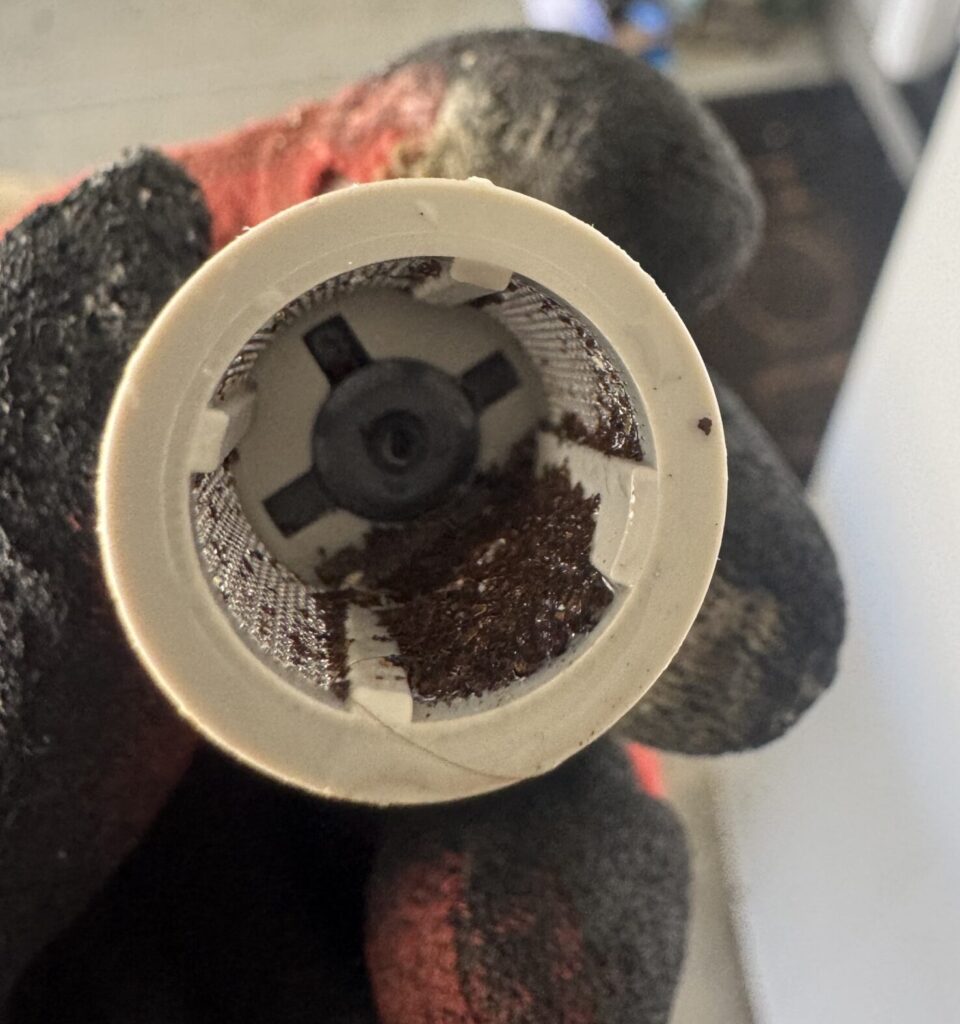
Every time water moves through your tankless water heater, minerals naturally found in the water pass through the unit’s internal components. Over time, some of those minerals can collect inside the water pathway and heat exchanger. This accumulation is commonly called mineral scale or scale buildup.
Routine flushing is designed to help loosen and remove that buildup. It is a relatively simple maintenance step that can support your system’s efficient operation and help you stay ahead of avoidable buildup-related issues.
What Happens Inside a Tankless Water Heater?
When you turn on a hot-water fixture, cold water enters the tankless unit and travels through a heat exchanger. The unit heats the water as it passes through before sending it to your faucet, shower or appliance.
Because the heat exchanger contains narrow internal passages, mineral deposits can gradually collect inside them. The amount and speed of buildup depend on several factors, including:
- Your home’s water quality
- The hardness of the water
- How frequently the system is used
- The age and condition of the unit
- Whether the property has a water softener or scale-control system
- The manufacturer’s maintenance requirements
Even if your system appears to be operating normally, mineral buildup may still be developing inside the unit.
Why Is It Important to Reduce Mineral Scale Buildup?
Mineral scale can make it more difficult for water to move through the system and for the heat exchanger to transfer heat as intended.
That does not mean every performance problem is caused by scale. Tankless water heaters are complex appliances, and changes in temperature, water flow or system operation can have many possible causes. However, keeping mineral buildup under control is an important part of routine tankless water heater care.
Manufacturer guidance commonly includes periodic flushing as part of regular maintenance. We generally recommend having your tankless water heater flushed once a year.
Four Reasons to Schedule Routine Flushing
1. Help Reduce Mineral Buildup
The primary purpose of flushing is to help loosen and remove mineral deposits from the water pathway and heat exchanger.
Keeping that buildup under control can help water continue moving through the unit as designed.
2. Support Efficient Operation
A tankless water heater depends on effective heat transfer. When mineral deposits collect inside the heat exchanger, the unit may have to work harder to heat the water passing through it. Reducing mineral buildup can support the unit’s ability to operate efficiently.
3. Support the Long-Term Care of Your System
A tankless water heater is an important household investment. Routine maintenance can help reduce buildup-related strain on internal components and support the ongoing care of the system.
Flushing cannot guarantee that a unit will last for a certain number of years or prevent every repair, but it is an important part of responsible maintenance.
4. Establish a Consistent Maintenance Schedule
Tankless water heater maintenance can be easy to forget, especially when the system appears to be working normally.
Scheduling service at a regular interval creates a maintenance history and makes it easier to remember when the next flush is due. It may also help you identify maintenance observations before they become more disruptive.
How Often Should a Tankless Water Heater Be Flushed?
For many homes, flushing the tankless water heater approximately once a year is a practical starting point. Homes with harder water, heavier hot-water use or no water-treatment system may need more frequent attention. Other properties may have different requirements based on the manufacturer, model or installed equipment.
Always review the maintenance instructions in your unit’s owner’s manual. If you are unsure when the system was last flushed, we can help you determine an appropriate next step.
Does a Water Softener Eliminate the Need for Flushing?
A water softener or scale-control system may help reduce mineral accumulation, but it does not automatically eliminate every maintenance requirement.
Always follow the guidance provided for both your tankless water heater and your water-treatment system.
Can Flushing Fix a Tankless Water Heater That Is Not Working?
Not necessarily, because flushing is primarily preventive maintenance. A tankless water heater that is leaking, displaying an error code, shutting down or failing to produce hot water may have a problem unrelated to mineral buildup.
Possible issues can involve ignition, gas supply, electrical components, venting, water flow, sensors or other parts of the system. Those conditions may require diagnosis or repair from a qualified professional.
If your system is not operating correctly, give us a call and explain the symptoms before scheduling so we can help determine whether routine flushing is the appropriate appointment.
Ready to Book Your Royal Flush?
If it has been approximately a year since your last service, or you don’t know when the unit was last flushed, now may be a good time to check your maintenance schedule.
Schedule your tankless water heater flush online or contact our team with questions about your unit.
Call or text: (909) 353-3269